How Much Does 2 Weeks in China Cost? Realistic 2026 Budgets by Travel Style
A realistic, category-by-category breakdown of what a 14-day trip to China actually costs in 2026—from hostel beds and bullet trains to national park tickets, private tours, and sample three-city itineraries.
Spend ten minutes reading travel forums before a trip to China and the numbers start to contradict each other. One traveler swears $2,000 lasted a full month on a student budget; the next asks whether £1,100 ($1,400) is normal for a three-day private tour in Zhangjiajie, or why domestic flights suddenly look so expensive.
The reason the numbers swing so wildly is that China has two completely different price ecosystems. Everyday local life, including metro rides, bowls of hand-pulled noodles, public parks, and even intercity bullet trains, remains remarkably affordable compared to Western Europe, North America, or Japan. At the same time, gated nature parks with mandatory cable cars, English-speaking private guides, and peak-holiday hotels in Shanghai or Beijing can double your daily spend overnight. Here is what two weeks in China actually costs in 2026, broken down by travel style, line item, and real routes.
The Short Answer: 2-Week China Cost by Travel Style
A two-week trip to China in 2026 typically costs $850 to $1,250 for a solo backpacker, $1,750 to $2,700 per person for a mid-range independent traveler, and $3,600 to $5,800+ per person for a comfortable trip with four-star hotels and occasional private guides, excluding international airfare.
With the exchange rate hovering around 6.7 to 7.0 Chinese Yuan (CNY / RMB) to 1 US Dollar in 2026, your home currency stretches well on the ground. The table below shows realistic daily and 14-day per-person figures across three clear tiers, including accommodation, food, local transport, sightseeing, and three or four intercity high-speed train legs.
Travel Style | Daily Budget (CNY) | Daily Budget (USD) | 2-Week Total (USD) |
|---|---|---|---|
Budget / Backpacker | ¥400 – ¥600 | $60 – $90 | $850 – $1,250 |
Mid-Range Independent | ¥850 – ¥1,300 | $125 – $195 | $1,750 – $2,700 |
Comfortable / Boutique | ¥1,700 – ¥2,800+ | $255 – $415+ | $3,600 – $5,800+ |
So is $2,000 enough for 27 days as a student? Yes, easily. That works out to roughly $74 (¥500) a day. If you stay in highly rated hostel dorms or budget guesthouses, eat at neighborhood noodle shops and university canteens, travel by second-class high-speed rail, and carry your physical student ID card (many major attractions grant half-price admission to undergrads under 18, and some extend discounts to international university students, though policies vary by gate), $2,000 covers four weeks with room to spare.
Line-by-Line Cost Breakdown: Where Your Money Goes
On a standard two-week China itinerary, accommodation and intercity transport account for roughly 55% to 65% of your total on-the-ground spending, while food and city transit make up less than 25%, and sightseeing tickets, cable cars, and guided tours account for the remaining 15% to 20%.
Accommodation: Hostels, Mid-Range Chains, and Boutique Hotels
Chinese hotels deliver noticeably better hardware for the price than equivalent tiers in London, New York, or Tokyo, and unlike used-to-be rules from a decade ago, the vast majority of mid-range chains and guesthouses now accept foreign passports without issue.
Hostel dorms (¥60 to ¥140 / $9 to $21 per night): Youth hostels in cities like Chengdu, Xi'an, and Yangshuo are social, clean, and often tucked into historic alleys or lively commercial districts.
Budget private rooms (¥160 to ¥280 / $24 to $42 per night): Clean en-suite rooms in family guesthouses or domestic chains like Hanting and Home Inn.
Mid-range hotels (¥350 to ¥700 / $52 to $105 per night): Domestic favorites like Atour, Ji Hotel, and Orange Crystal, or courtyard guesthouses in historic towns, offering modern design, free laundry rooms, and substantial buffet breakfasts.
Comfortable 4-to-5-star & heritage stays (¥900 to ¥2,000+ / $135 to $300+ per night): International five-star brands in tier-one cities often start around $150 to $220, roughly half what the same brand charges in Western capitals.
High-Speed Trains vs. Domestic Flights
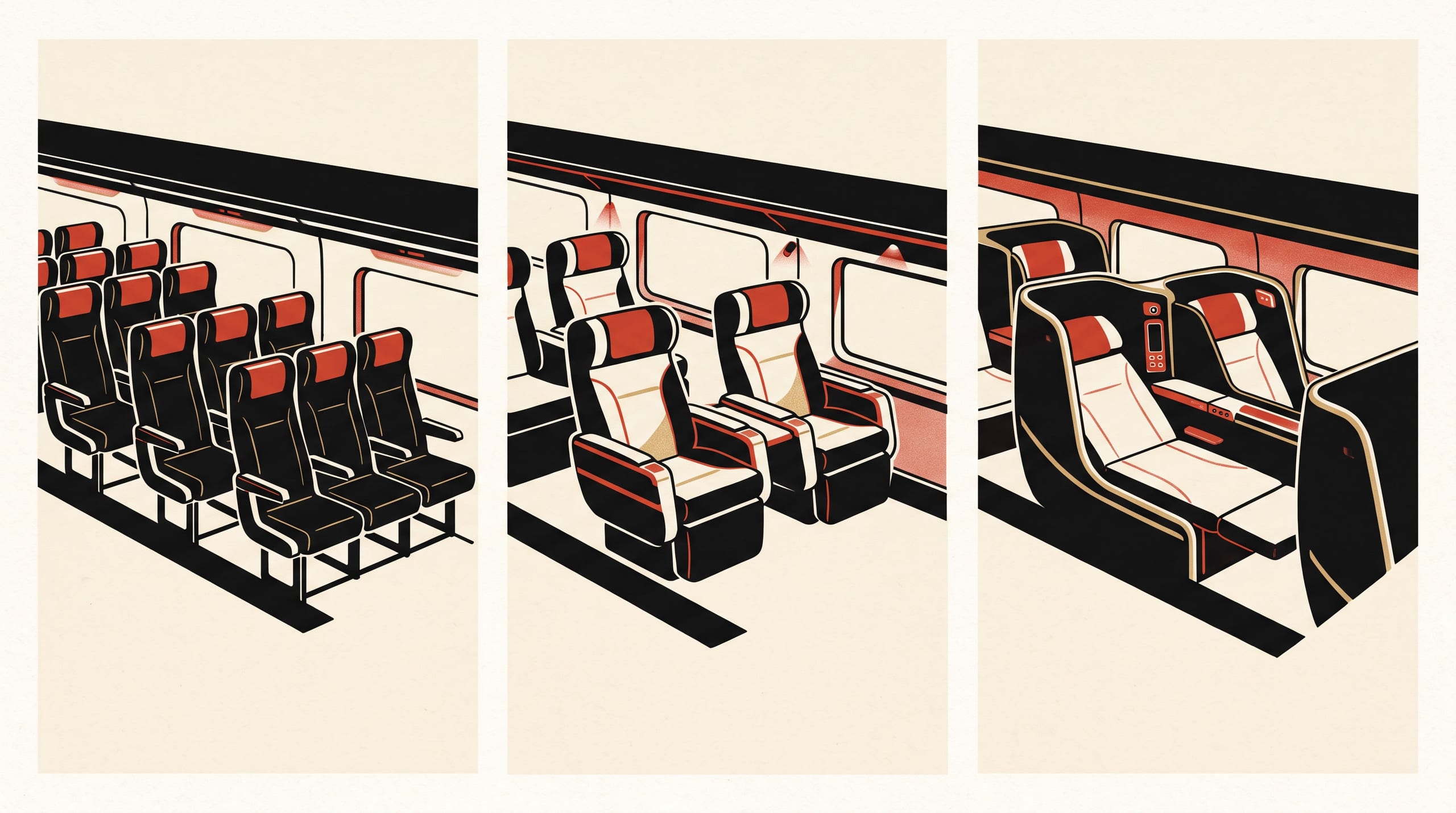
Intercity transport is usually your single biggest fixed cost after hotels, with high-speed bullet trains offering fixed, predictable pricing and city-center arrivals, while domestic flights swing from deeply discounted economy fares in the off-season to full-price rates within a few days of departure.
High-speed rail (G- and D-trains) is the backbone of almost every two-week route. Second-class seats are spacious, clean, and fixed in price. They do not surge the day before departure, though popular trains sell out. Here are real 2026 second-class fare ranges on common routes:
Route | Typical HSR Duration | Second-Class Fare (CNY) | Approx. Cost (USD) |
|---|---|---|---|
Beijing – Shanghai | 4h 20m – 6h 00m | ¥522 – ¥697 | $78 – $104 |
Beijing – Xi'an | 4h 15m – 5h 45m | ¥515 – ¥570 | $77 – $85 |
Xi'an – Chengdu | 3h 10m – 4h 15m | ¥263 – ¥315 | $39 – $47 |
Guilin – Zhangjiajie | 4h 30m – 6h 30m (1 transfer) | ¥250 – ¥400 | $37 – $60 |
What about the common complaint that domestic flights are super expensive? If you search a US or European flight aggregator two months in advance, Chinese airlines often display only their full-fare Y-class economy rate (frequently $300+ one way). In reality, domestic airlines release promotional sub-classes closer to departure (typically two to four weeks out), and platforms like Trip.com show those discounted fares (often ¥450 to ¥900 / $67 to $135 for a two-hour hop). Unless a train journey exceeds six hours, high-speed rail is almost always cheaper and faster door-to-door.
To see how specific rail legs add up across your own stops, you can check exact journey times and fares in our train connection checker.
Food, Coffee, and Dining Out
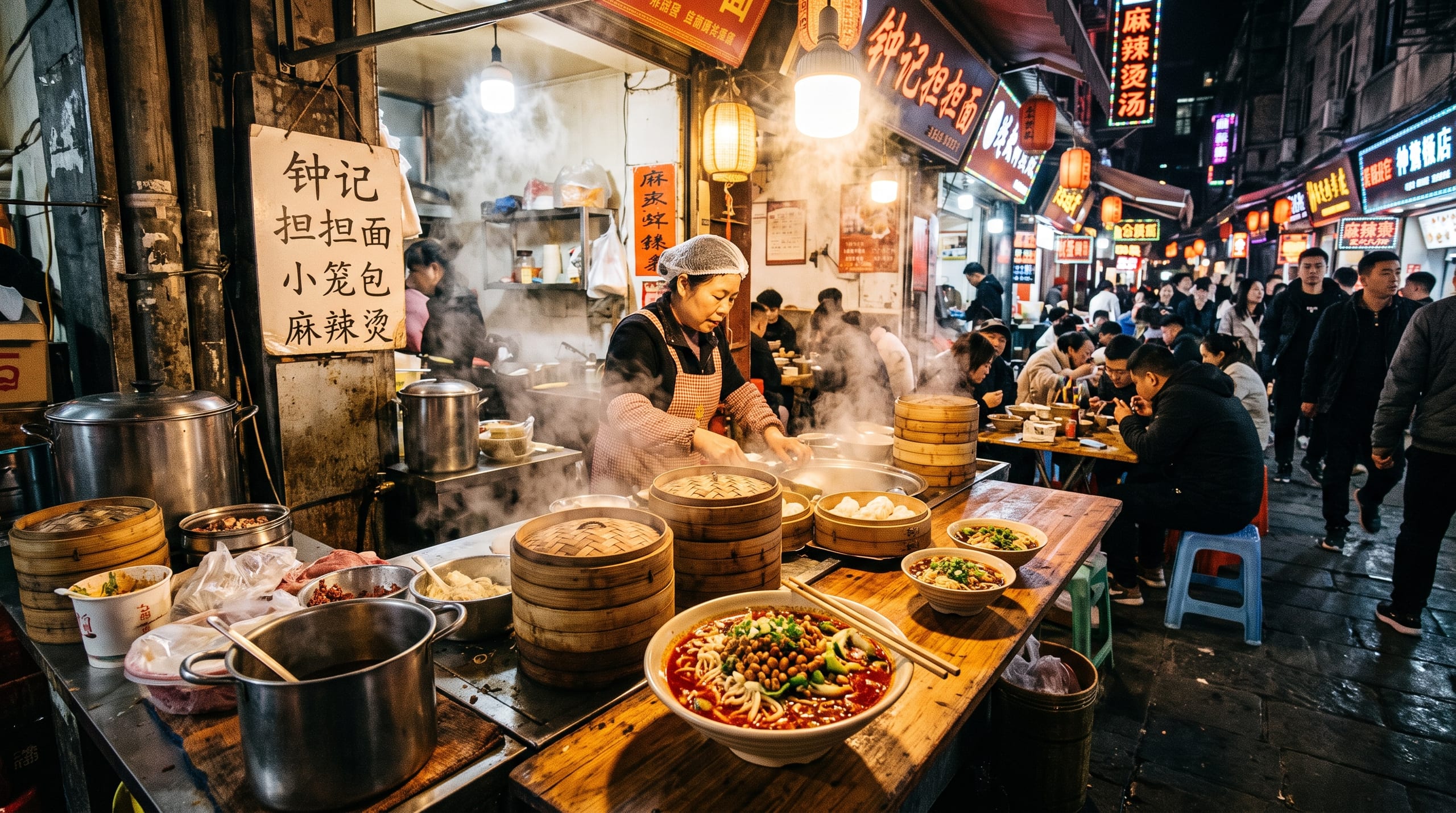
Food in China is one of the greatest bargains in global travel, allowing you to eat fresh, regional specialties three times a day for $10 to $15 on a budget, or feast on Peking duck, hotpot, and regional banquets for $25 to $45 per day.
Breakfast & street snacks (¥8 to ¥20 / $1.20 to $3): Steamed buns (baozi), savory crepes (jianbing), soy milk, or a morning bowl of Chongqing small noodles.
Casual sit-down lunch or dinner (¥20 to ¥45 / $3 to $6.75): Hand-pulled beef noodles, Cantonese roast goose over rice, or dumplings at a neighborhood spot.
Mid-range restaurants & regional icons (¥80 to ¥160 / $12 to $24 per person): A full Sichuan hotpot spread, a half Peking duck with pancakes and sides in Beijing, or dim sum at a storied teahouse in Guangzhou.
Coffee & boba tea (¥10 to ¥35 / $1.50 to $5.20): Fresh fruit teas at Heytea or Chagee run ¥15 to ¥22 ($2.25 to $3.30), domestic chain coffees like Luckin or Manner cost ¥10 to ¥18 ($1.50 to $2.70), and third-wave independent cafes in Shanghai or Chengdu charge ¥28 to ¥42 ($4.20 to $6.30).
Attraction Tickets and National Parks
Sightseeing costs split sharply between historic urban monuments, which are state-subsidized and inexpensive, and rural natural parks, where multi-day entry passes, internal shuttle buses, and separate cable cars quickly push single-day ticket costs past $50 to $90 per person.
Attraction | 2026 Base Ticket (CNY) | Approx. USD | Common Add-Ons / Notes |
|---|---|---|---|
Forbidden City (Beijing) | ¥60 peak / ¥40 off-peak | $6 – $9 | +¥10 each for Treasure & Clock Galleries |
Mutianyu Great Wall | ¥40 – ¥45 base | $6 – $7 | +¥15 shuttle; +¥140 ($21) round-trip cable car/toboggan |
Terracotta Warriors (Xi'an) | ¥120 – ¥150 | $18 – $22 | Includes Lishan Garden & shuttle between sites |
Zhangjiajie National Forest Park | ¥236 (4-day pass) | ~$35 | Includes eco-buses; Bailong Elevator & cableways extra (¥65–¥76 each way) |
If your itinerary leans heavily toward Beijing, Xi'an, and Luoyang, your daily ticket spend will stay modest. If you spend four days in Zhangjiajie hitting the National Forest Park, Tianmen Mountain (¥261 / $39 peak), and the Grand Canyon Glass Bridge, expect to spend $130 to $180 per person on park admissions and cableways alone.
Local Transit, eSIMs, and Pre-Trip Costs
Daily urban logistics (subway rides, Didi ride-hailing, and mobile data) rarely exceed $5 to $12 per day, though your pre-trip budget must account for either visa fees or your eligibility under China's expanded visa-free and 240-hour transit policies.
Metro & public buses: ¥2 to ¥7 ($0.30 to $1.05) per ride in almost every city, payable directly by tapping Alipay or WeChat transport QR codes, or with contactless foreign bank cards in cities like Beijing and Shanghai.
Didi (ride-hailing): A 20-minute cross-town ride typically costs ¥18 to ¥45 ($2.70 to $6.75), which is very cheap when split between two or three people.
eSIMs and data: A two-week travel eSIM (10GB to 30GB) with built-in roaming that bypasses the Great Firewall without a separate VPN costs $15 to $35 total.
Visas: Citizens of dozens of countries (including most of Europe, Australia, New Zealand, Japan, and Singapore) currently qualify for unilateral visa-free entry, and 50+ nationalities can use the 240-hour (10-day) visa-free transit rule when flying through China to a third country or region (such as Hong Kong). Standard tourist visas for US, UK, and Canadian passports remain a noticeable upfront cost (around $140 to $190 including service center fees). Check the exact rules for your passport on our China visa requirements page.
Where Travelers Overspend (and What About That £1,100 Tour?)
The biggest budget traps in China are booking multi-day private tours through international resellers at steep markups, paying third-party agencies double for museum tickets you can reserve on WeChat, and traveling during domestic Golden Week holidays when hotel rates double or triple.
Take that real traveler question from Reddit: "Is £1,100 ($1,400) too much for a 3-day private tour in Zhangjiajie?"
If that £1,100 is for one or two people excluding luxury five-star hotels, yes, you are overpaying by a wide margin. Let's do the math on what a 3-day Zhangjiajie visit actually costs if you put the pieces together yourself or hire a local driver/guide directly:
Tickets for 2 people: 4-day Forest Park pass (¥236 × 2) + 3 cable car/elevator rides (~¥210 × 2) + Tianmen Mountain (¥261 × 2) = roughly ¥1,414 ($210 total for two).
3 nights in a great boutique guesthouse in Wulingyuan: ¥500/night × 3 = ¥1,500 ($224).
Private car and driver for 3 days (or an English-speaking local freelance guide): Typically ¥600 to ¥1,000 ($90 to $150) per day, or ~$270 to $450 for three days.
Even with private guiding, all cable cars, and boutique hotels, the real local cost for two people is roughly $700 to $900 (£550 to £700). If you take the park's included eco-buses on your own instead of hiring a guide, the entire three days for two people drops under $450 (£350).
How Your Costs Shift by City and Season
Your daily budget in China will swing by 30% to 50% depending on where and when you go: Shanghai and Beijing command the highest hotel rates, southwest hubs like Chengdu and Chongqing offer exceptional mid-range value, and domestic public holidays trigger sharp price spikes.
Tier 1 (Shanghai, Beijing, Shenzhen): Expect to pay 30% to 40% more for equivalent hotel space. A ¥500 ($75) hotel room in central Shanghai is compact; the same ¥500 in Chengdu or Xi'an gets you a spacious design hotel with breakfast.
High-Value Hubs (Chengdu, Chongqing, Xi'an, Luoyang, Quanzhou): Food and local transit are noticeably cheaper, and boutique hotels in historic quarters sit in a sweet spot of $45 to $85 a night.
Dates to Avoid for Your Wallet: During Labor Day week (May 1 to 5) and National Day Golden Week (October 1 to 7), domestic tourism surges. Hotel prices in tourist towns like Yangshuo, Zhangjiajie, or Xitang can double or triple, and discounted flights vanish. Shoulder months like April (outside holidays), late May, September, and late October to November give you comfortable weather and normal hotel pricing.
Sample 2-Week China Budgets for 3 Real Routes
To see how these numbers work together on a real map, here are three 14-day route budgets per person (assuming two mid-range travelers sharing a room, or a solo backpacker in the budget column), excluding international flights.
2-Week Route | Key Intercity Rail / Transport | Backpacker Total (USD) | Mid-Range Total (USD) |
|---|---|---|---|
Classic First-Timer: Beijing (5N) – Xi'an (3N) – Shanghai (5N) | Beijing–Xi'an HSR ($82) + Xi'an–Shanghai HSR or flight ($110–$140) | $920 – $1,150 | $1,900 – $2,450 |
Nature & Southwest: Chengdu (4N) – Chongqing (2N) – Zhangjiajie (4N) – Guilin/Yangshuo (3N) | Regional HSR legs throughout (~$145 total rail) + heavy park/cable car fees (~$160) | $980 – $1,250 | $1,850 – $2,350 |
Foodie & Heritage South: Guangzhou (3N) – Guilin/Yangshuo (4N) – Quanzhou (3N) – Xitang & Shanghai (3N) | Southern HSR corridor legs (~$175 total rail) | $850 – $1,100 | $1,750 – $2,250 |
Because a trip across Beijing and Shanghai costs very different money from a loop through Sichuan and Yunnan, guessing from a single country-wide daily average only gets you so far. You can build out your exact route in our China trip budget calculator and China trip planner to track line-item costs per city (accommodation, food, activities, and local transport) plus trip-wide expenses in your own home currency. Until January 1, 2028, every non-Lulu planning feature is free for every account, including a per-city, per-category budget check that compares your numbers against web-sourced, cited typical ranges for each specific city so you can see immediately which stop or category is pushing your two-week total up or down.