Shanghai Maglev: Ticket Price, Route and Is It Worth It
The Shanghai Maglev covers the 30 kilometers from Pudong International Airport to Longyang Road in about eight minutes, but it stops short of downtown. Here is what it costs, how to transfer to the metro, and when to take a taxi or Metro Line 2 instead.
Few airport transfers double as a bucket-list engineering ride, but the Shanghai Maglev is not an ordinary airport train. Floating on magnetic levitation instead of steel wheels, it covers the eastern outskirts of Pudong in roughly eight minutes. Most passengers spend the whole trip watching the digital speedometer on the cabin bulkhead climb toward 300 km/h.
Yet the Maglev has one quirk that catches first-time visitors off guard: it does not actually go to central Shanghai. It terminates at Longyang Road in Pudong, where you still need a metro ride or a cab to reach the Bund, People's Square, or Jing'an. Here is exactly how the route works, how to claim the same-day flight discount, and whether the ride makes sense for your arrival.
Route, Speed, and Operating Hours from Pudong Airport
The Shanghai Maglev runs a dedicated 30-kilometer elevated line between Shanghai Pudong International Airport (PVG) and Longyang Road Station in Pudong, completing the non-stop journey in roughly eight minutes at a current commercial top speed of 300 km/h, with trains departing every 15 to 20 minutes from early morning until late evening (check the current figure before you travel).
At Pudong Airport, the Maglev station sits inside the central transportation hub directly between Terminal 1 and Terminal 2, connected to both arrivals halls via enclosed, clearly signed elevated walkways. Although the train once reached 431 km/h during peak daytime slots in earlier years, Shanghai's operator has capped regular commercial service at 300 km/h (check the current figure before you travel). Even at 300 km/h, the acceleration out of the station and the banked turns over Pudong's canals and farmland feel noticeably different from a conventional bullet train.
Direction | First Train | Last Regular Train | Frequency & Late Runs |
|---|---|---|---|
Pudong Airport to Longyang Road | 07:02 | 21:42 | Every 15–20 min, plus extra late trains at 22:15 and 22:40 (check the current figure before you travel) |
Longyang Road to Pudong Airport | 06:45 | 21:40 | Every 15–20 min throughout the day (check the current figure before you travel) |
If your flight lands after the final evening departure, you will need to take a night bus or a metered taxi instead, as both the Maglev and standard Metro Line 2 shut down for the night around the same window.
Ticket Prices and the Same-Day Flight Discount
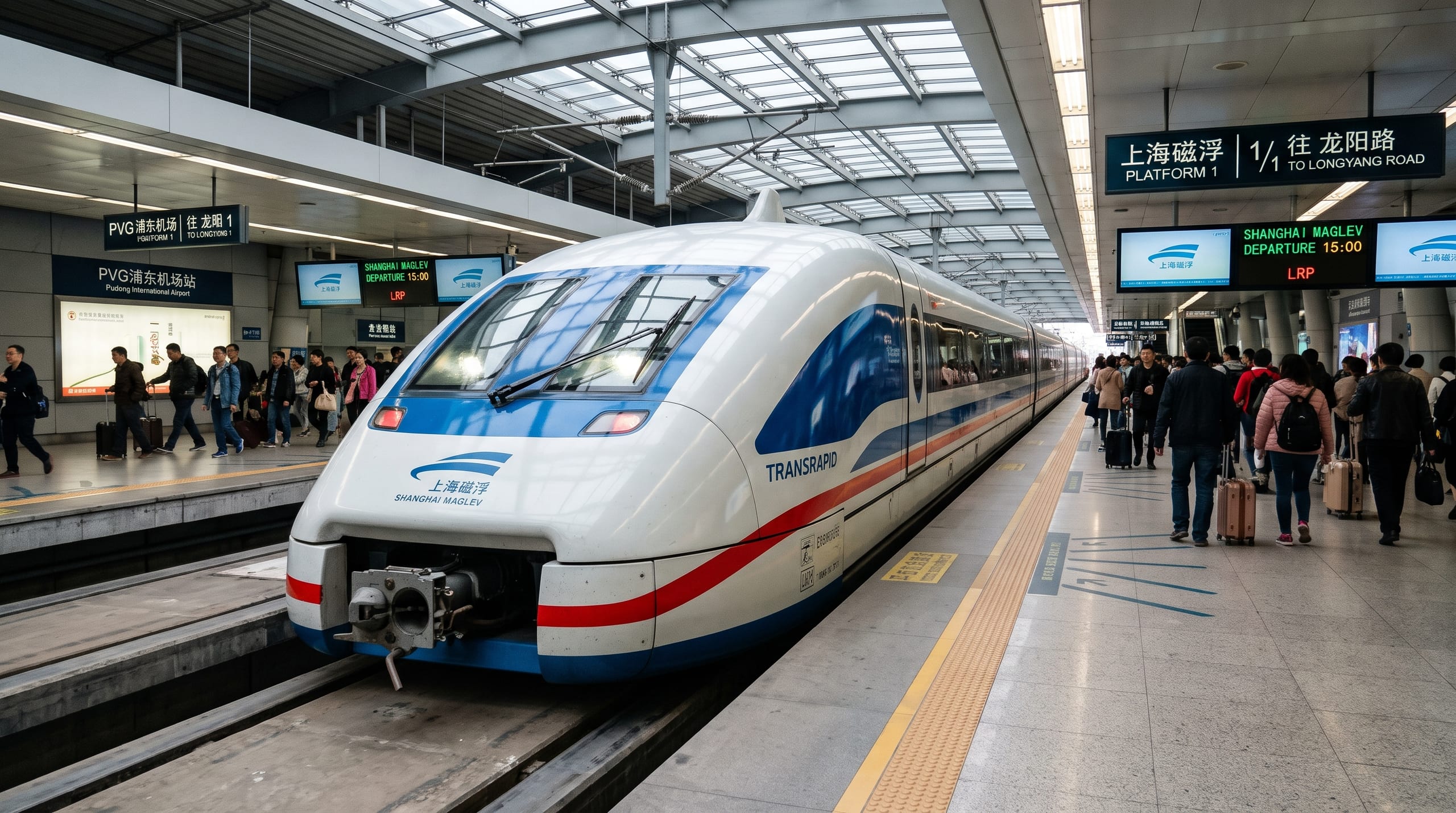
A standard one-way Economy ticket on the Shanghai Maglev costs 50 CNY, while travelers holding a physical or digital boarding pass or flight itinerary for a same-day flight can buy a discounted one-way Economy ticket at the counter for 40 CNY, or pay 80 CNY for a seven-day round-trip ticket (check the current figure before you travel).
The train offers two cabin classes: Economy and VIP. Because the entire journey lasts only about eight minutes, VIP class (a wider seat in a quieter carriage at double the fare) rarely justifies the extra cost unless you want the front-car view.
Ticket Type | Price (CNY) | Validity & Conditions |
|---|---|---|
One-Way Economy (Standard) | 50 CNY | Valid on the day of purchase (check the current figure before you travel) |
One-Way Economy (Flight Discount) | 40 CNY | Show a same-day boarding pass or flight ticket; also applies with a Shanghai Public Transportation Card (check the current figure before you travel) |
Round-Trip Economy | 80 CNY | Valid for two rides within 7 days of purchase (check the current figure before you travel) |
One-Way / Round-Trip VIP | 100 CNY / 160 CNY | Same-day one-way or 7-day round-trip in the VIP cabin (check the current figure before you travel) |
Buying Tickets and Handling Luggage on Board
Passengers can purchase Shanghai Maglev tickets at staffed station counters or self-service ticket machines using cash, Alipay, or WeChat Pay, or tap straight through the turnstiles using the Shanghai Metro Daduhui app QR code or a Shanghai Public Transportation Card, before clearing a mandatory X-ray baggage screening on the way to the platform.
How to Buy Your Ticket
You do not need to book the Maglev in advance; seats are unreserved and capacity is generous even when two wide-body flights land together, so you simply buy or tap and walk onto the next departing train at either Pudong Airport or Longyang Road Station.
Staffed ticket counter: Required if you want to claim the 40 CNY same-day flight discount (check the current figure before you travel) by showing your boarding pass or e-ticket confirmation. Counters accept RMB cash, Alipay, and WeChat Pay.
Self-service vending machines: Switch the touchscreen language to English to buy standard 50 CNY single or 80 CNY return plastic tokens (check the current figure before you travel) using digital wallets or cash.
App QR codes and transit cards: If you already have the Alipay transit QR code or the ShanghaiPublic Transport Card set up on your phone or Apple Wallet, you can tap straight at the gate without stopping at a booth. Tapping a physical or digital Shanghai Public Transportation Card also triggers the 40 CNY fare automatically (check the current figure before you travel).
Luggage Rules and Racks
Bringing suitcases onto the Maglev is straightforward and much less cramped than boarding a peak-hour subway car, as every carriage has dedicated luggage racks near the doors and wide aisles designed specifically for international air travelers carrying checked bags.
Security screening: Just like Chinese metro and rail stations, both Maglev terminals require you to pass all suitcases and backpacks through an X-ray belt at the entrance. Keep water bottles accessible, as security staff often ask you to take a sip or place the bottle on a scanner.
On-board storage: Full-size 28-inch suitcases fit into the metal racks just inside the carriage doors, while smaller cabin bags can go on the overhead shelves or between your knees.
Platform access: Both Pudong Airport Station and Longyang Road Station have elevators and escalators connecting the ticket hall to the train platforms, though transferring to the metro afterward involves a longer indoor walk.
Connecting at Longyang Road to the City Centre and Rail Stations
Longyang Road Station is a major four-line metro interchange in Pudong serving Shanghai Metro Lines 2, 7, 16, and 18, allowing Maglev passengers to walk downstairs in about five minutes and board westbound Line 2 trains directly to Lujiazui, East Nanjing Road, People's Square, Jing'an Temple, and Hongqiao.
When you step off the Maglev at Longyang Road, follow the overhead signs for the Shanghai Metro. Because the Maglev and the metro operate on separate ticketing systems, you will exit the Maglev turnstiles first, walk down to the metro concourse, and tap into the subway gates (metro fares to central Shanghai typically run 4 to 6 CNY depending on distance; check the current figure before you travel).
Metro Line 2 (Green): The main east-west artery for most visitors. Heading west from Longyang Road, it reaches Lujiazui (the Oriental Pearl Tower and skyscraper district) in about 15 minutes, East Nanjing Road (for the Bund) and People's Square in roughly 20 to 25 minutes, and continues to Jing'an Temple and Hongqiao Railway Station.
Metro Lines 7, 16, and 18: Useful if you are staying in southern Pudong, the former French Concession near Changshu Road (via Line 7), or heading southeast toward Dishui Lake (Line 16).
Connecting to intercity trains: If you are heading straight from Pudong Airport to catch a bullet train out of the city, check our major China railway station guides to verify which terminal prints on your ticket. Line 2 runs straight from Longyang Road to Shanghai Hongqiao Railway Station, whereas reaching Shanghai Railway Station requires transferring from Line 2 to Line 1 at People's Square (or taking Line 4 from Century Avenue). If this is your first time riding intercity trains after landing, our guide to China high-speed rail for first-timers walks through how 12306, passport gates, and station security differ from airport transit.
Maglev vs. Metro Line 2 vs. Taxi: Time and Cost Compared
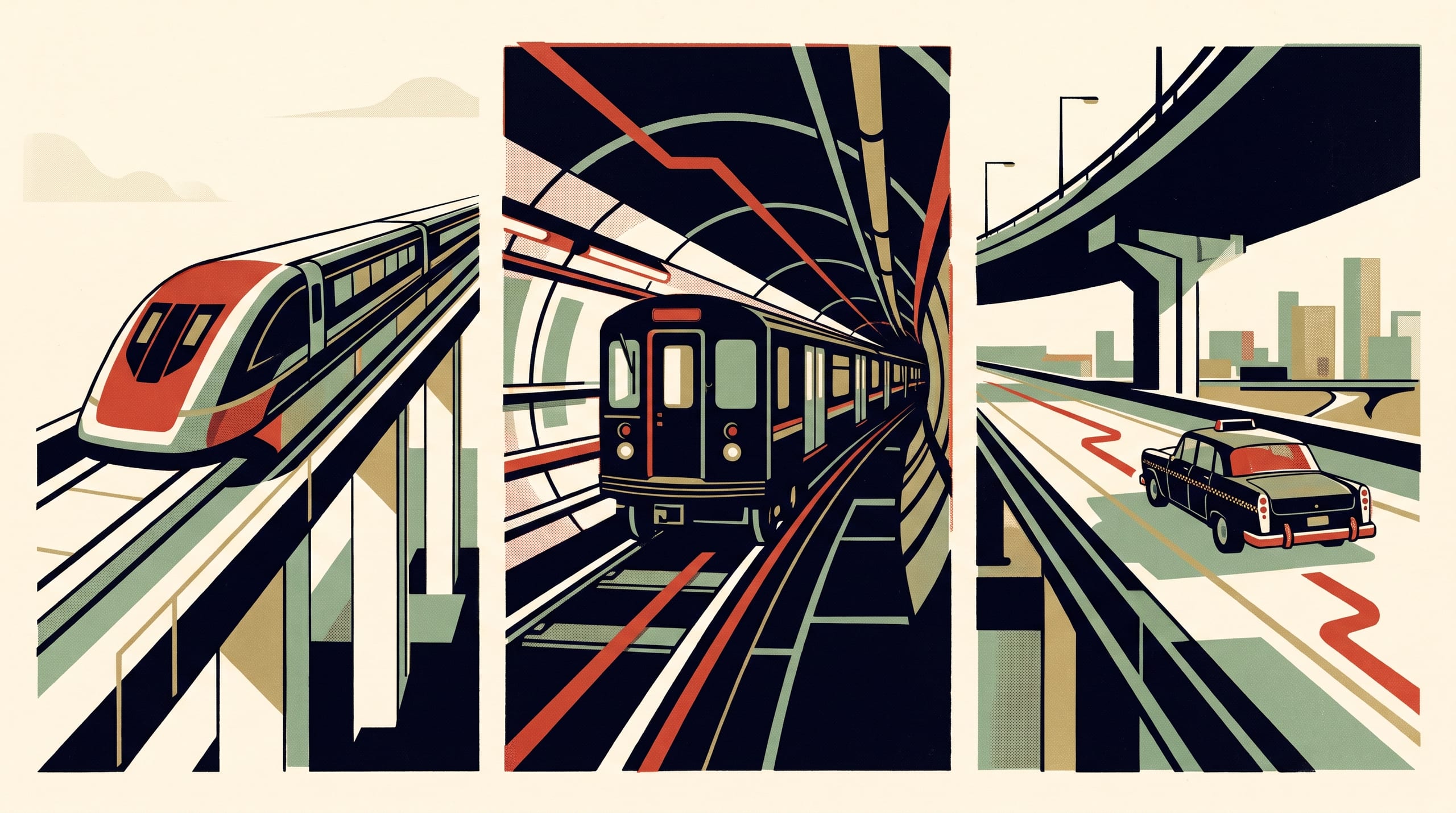
Combining the Maglev and Metro Line 2 gets you from Pudong Airport to People's Square in roughly 45 to 55 minutes for 44 to 55 CNY total, saving about 20 minutes over taking Metro Line 2 the entire way (7 CNY) while costing roughly a third of a metered airport taxi (150 to 200 CNY; check the current figure before you travel).
Transport Option | Total Cost to People's Square | Total Travel Time | Transfer Required |
|---|---|---|---|
Maglev + Metro Line 2 | 44–55 CNY (40–50 CNY Maglev + ~4–5 CNY Metro; check the current figure before you travel) | ~45–55 minutes (including wait and transfer walk) | Yes, 5-minute walk between gates at Longyang Road |
Metro Line 2 (All the Way) | ~7–8 CNY (check the current figure before you travel) | ~65–75 minutes | No station exit needed, direct ride into town |
Metered Taxi / DiDi | ~150–220 CNY depending on time of day and traffic (check the current figure before you travel) | ~45–75 minutes depending on expressway traffic | None; door-to-door to your hotel lobby |
If you are mapping out your transport spend across Shanghai and the rest of your route, you can plug your airport transfers and intercity rail legs into our China trip budget calculator, and until January 1, 2028, every account also gets the per-city, per-category budget check that compares your local transport, food, and hotel estimates against cited typical ranges for Shanghai.
Verdict: Who Should Take the Shanghai Maglev (and Who Should Skip It)
The Shanghai Maglev is well worth taking for solo travelers or couples who want to experience the world's first commercial high-speed magnetic levitation train or beat rush-hour expressway congestion into Pudong, but travelers with heavy luggage, families of three or more, and late-night arrivals are better off taking a taxi or the direct metro.
Take the Maglev If:
You should board the Shanghai Maglev if the ride itself appeals to your curiosity or if your hotel sits near Longyang Road, Century Avenue, Lujiazui, or directly along the central Line 2 corridor where a single easy transfer gets you downtown fast.
You want the experience: It remains the fastest commercial airport train in operation anywhere in the world, and 40 CNY with a boarding pass (check the current figure before you travel) is a bargain for a 300 km/h ride.
You are traveling solo with carry-on or manageable luggage: For one person, 44 CNY for Maglev plus Metro beats paying 160+ CNY for a solo cab while cutting 20 minutes off the dull outer-suburban stretch of Metro Line 2.
You land during evening rush hour (17:00 to 19:30): When the Inner Ring Road and Yan'an Elevated Road clog up, the Maglev + Line 2 combination is much more predictable than road traffic.
Skip the Maglev If:
You should skip the Shanghai Maglev if carrying multiple heavy suitcases through the Longyang Road interchange sounds exhausting after a long-haul flight, or if you are traveling in a group where splitting a taxi costs roughly the same per person for door-to-door service.
You are a group of three or four: Three Maglev tickets plus three metro fares already add up to 135 to 165 CNY (check the current figure before you travel), nearly the exact price of a metered taxi or DiDi that drops you directly at your hotel door with zero stairs or transfers.
You are hauling multiple heavy bags or traveling with young kids: Transferring at Longyang Road means exiting one station, walking through a busy concourse, going through a second security check, and boarding a crowded Line 2 subway train.
You are on a strict shoestring budget: Taking Metro Line 2 directly from Pudong Airport takes only about 20 minutes longer overall and costs around 7 CNY (check the current figure before you travel) from start to finish.