City · China
Hotan
和田
A southern Taklamakan oasis where Uyghur artisans weave atlas silk and prospectors sift dry riverbeds for prized nephrite jade.
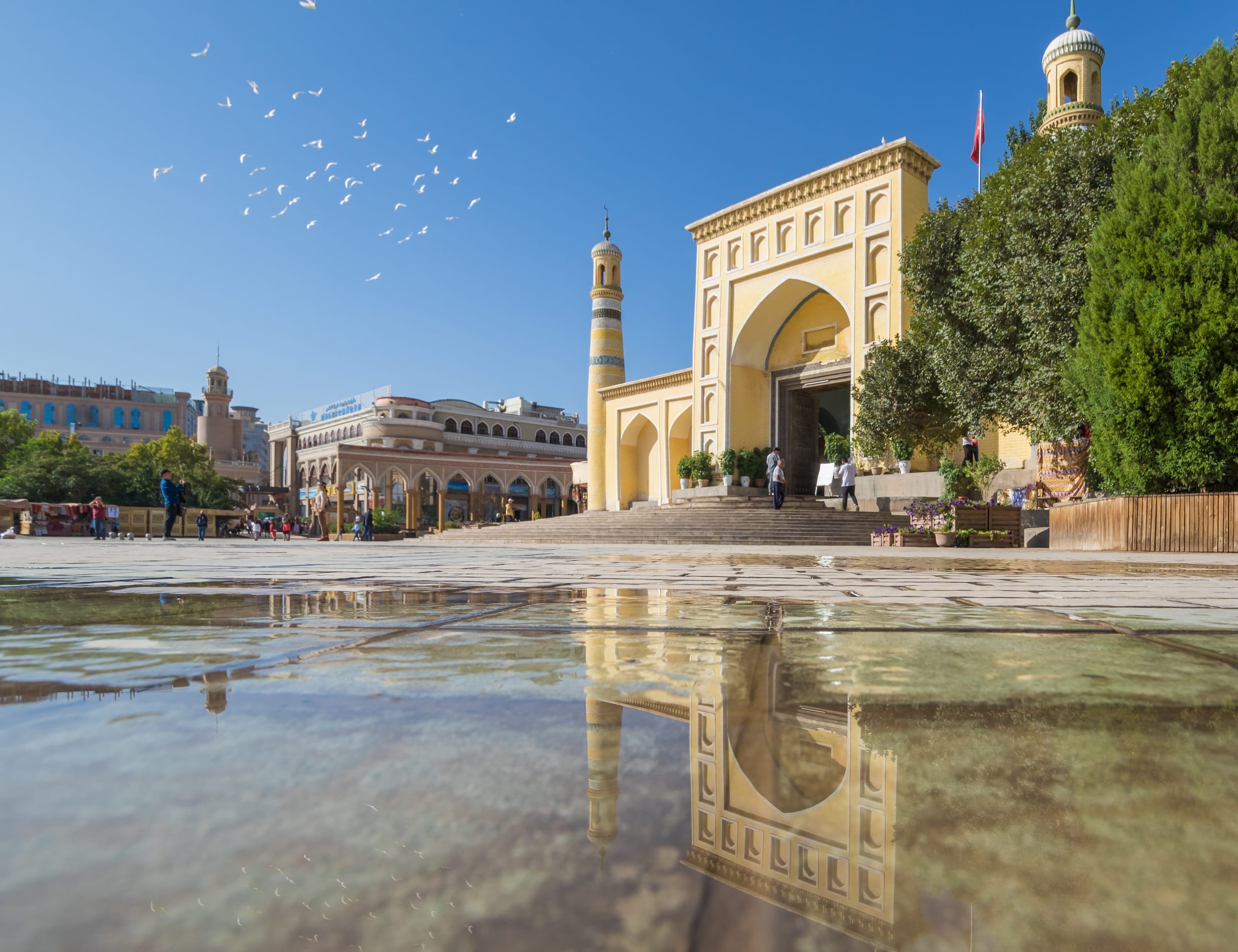
Anchored between the Taklamakan Desert and the Kunlun Mountains, Hotan is one of the southern Silk Road's great historic oases. Formerly the center of the ancient Buddhist Kingdom of Khotan, the city today has a deeply Uyghur character and is across China for three traditional crafts: nephrite jade, handwoven carpets, and tie-dyed atlas silk. It feels noticeably less touristed and more trade-focused than northern Xinjiang hubs.
Two days is enough to experience the markets, workshops, and immediate desert surroundings. Base yourself near Unity Square (Tuanjie Square) in the city center for easy access to transport and the Hotan Night Market. Good half-day trips include crossing the Yurungqash River to Jiya Township for traditional silk workshops or taking a 4WD out to the Melikawat Ruins. Hotan pairs naturally with Kashgar to the northwest and Kuqa to the north via the desert highway or rail loop. It suits travelers drawn to living craft traditions, lively bazaars, and Silk Road history, though visitors expecting grand intact monuments may find the eroded desert ruins underwhelming.
Updated 24 October 2026
Add Hotan to your China trip
See what it costs, how to get there by train and the best weeks to go, city by city.
Plan your trip, freeHighlights
Hotan Bazaar, Jiya Township Atlas Silk Workshops, Yurungqash River (White Jade River) +3
Highlights
Hotan Bazaar, Jiya Township Atlas Silk Workshops, Yurungqash River (White Jade River) +3
01Hotan Bazaar
Operating daily but peaking in energy on Sundays, this sprawling market complex is the place to see bolts of atlas silk, hand-knotted wool carpets, embroidered doppa skullcaps, and local spices.
必看02Jiya Township Atlas Silk Workshops
Just across the Yurungqash River in Jiya Township, family workshops and the Hotan Silk Factory demonstrate the centuries-old process of boiling silkworm cocoons, tie-dyeing threads with natural pigments, and weaving traditional patterns on wooden looms.
必看03Yurungqash River (White Jade River)
Melting snow from the Kunlun Mountains carries nephrite boulders down this wide riverbed each summer. Once the water recedes, locals and visitors walk the dry cobbles hoping to spot uncarved Mutton Fat jade, while intense trading happens at the nearby jade markets.
04Hotan Night Market
Every evening, long rows of steamed, roasted, and grilled Uyghur street food light up the center of town. Come hungry to try roasted goose eggs, tandoor-baked samsa, yogurt with pomegranate syrup, and lamb kebabs.
Show all 6Show fewer
05Melikawat Ruins
Located about 25 kilometers south of town along the Yurungqash River and best reached by 4WD, these sun-baked clay walls and stupa mounds are the weathered remains of a major Buddhist settlement from the ancient Kingdom of Khotan.
06Hotan Museum
Before heading out to the desert sites, stop here for essential context on the Silk Road oasis. Exhibits display Niya brocade replicas, wooden Kharosthi script tablets, ancient textiles, and centuries of Khotanese Buddhist art.
Travel tips
Time your visit for Sunday, Be cautious buying jade, Beijing Time vs Xinjiang Time +2
Travel tips
Time your visit for Sunday, Be cautious buying jade, Beijing Time vs Xinjiang Time +2
Time your visit for Sunday
While Hotan's markets are open every day, Sunday brings buyers and sellers from surrounding oasis villages, turning the textile, spice, and suburban livestock bazaars into an unmissable spectacle.
Be cautious buying jade
Genuine Hotan nephrite is prized across China and commands very high sums. Unless you are an experienced collector, treat river-stone sellers and market stalls as sightseeing rather than an investment opportunity.
Beijing Time vs Xinjiang Time
Trains, flights, and hotels run on official Beijing Time, while many local Uyghur shops and bazaars informally operate two hours behind on Xinjiang Time. Peak midday activity at the Sunday market happens around 2:00 PM Beijing Time.
Keep your passport handy
Security checkpoints are routine when entering cities, train stations, bazaars, and museums across southern Xinjiang. Always carry your physical passport rather than a phone photo to avoid delays.
Pack for desert dust and dryness
Sitting right on the edge of the Taklamakan, Hotan is extremely dry year-round and prone to dusty winds in spring. Bring a scarf or mask, sunglasses, lip balm, and plenty of water when visiting outdoor ruins.
Best hotel rates. Guaranteed foreigner-friendly.
Skip the hotels that turn foreign passports away at check-in. Every listing here takes international guests, booked at Trip.com's best rates — real-time availability, no surprises.
Affiliate links: if you book through these we earn a small commission at no extra cost to you. We don’t set tracking cookies; attribution is handled by the partner site.
How to get to Hotan
Hotan Kun冈 Airport (HTN), located just south of the city center, receives daily direct flights from Urumqi (about 2 hours) and Kashgar (about 1 hour), alongside connections to several inland Chinese hubs. By rail, conventional trains run northwest to Kashgar in roughly 4 to 6 hours and connect onward to Urumqi, while the Hotan-Ruoqiang railway links the city eastward along the southern rim of the Taklamakan Desert. Adventurous travelers also arrive from Aksu or Kuqa by hiring a car across the Taklamakan Desert Highway.
Explore other cities
Hotan is on your list.
Now build the whole trip around it.